
Unpleasant odours in your home are never random. If you’re noticing strange or persistent plumbing smells, it’s usually a sign that something isn’t working the way it should. Plumbing related smells often point to hidden issues that can worsen over time.
From sewer gas to mold and buildup inside pipes, these smells aren’t just annoying. They are signs your plumbing system needs attention. Understanding what different plumbing smells mean can help you take action before a small issue turns into costly damage.
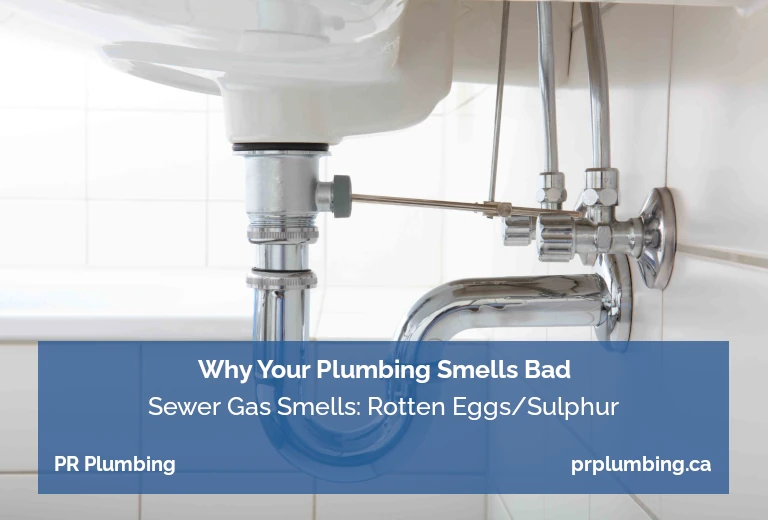
Sewer Gas Smells: Rotten Eggs/Sulphur
One of the most common plumbing smells homeowners notice is a strong sulphur or “rotten egg” odor. This usually indicates sewer gas escaping into the home.
Sewer gas is meant to exit your plumbing system through vent pipes on the roof. When something disrupts that process, the smell can travel back through drains.
Common causes include:
- Dry p-traps caused by unused sinks, tubs, or floor drains
- Cracked or damaged vent pipes
- Blocking plumbing vents
Sewer gas isn’t just unpleasant. It can also be harmful in enclosed spaces. If the smell persists, it’s best to have a professional inspect the system rather than trying to mask it.
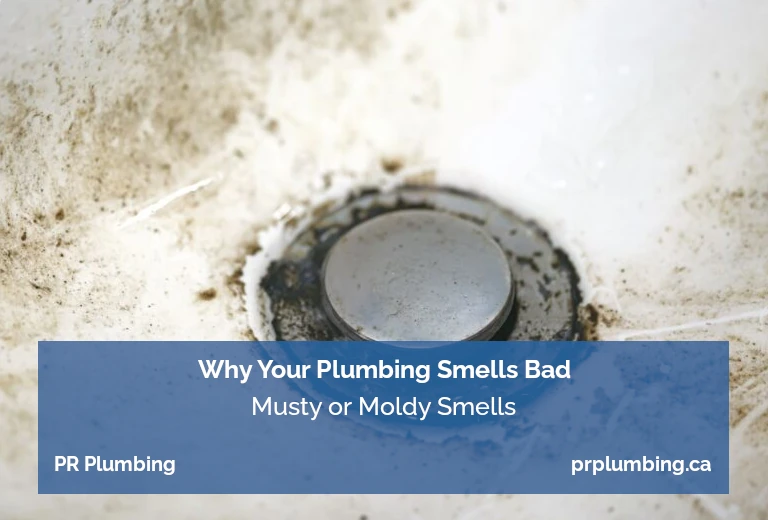
Musty or Moldy Smells
A damp, musty smell often points to excess moisture somewhere it shouldn’t be. In plumbing systems, this usually means a slow leak or ongoing condensation issue.
Possible sources include:
- Small pipe leaks behind walls
- Leaks under sinks or cabinets
- Poor ventilation around plumbing fixtures
These smells often develop gradually, which makes them easy to ignore at first. Unfortunately, that also means moisture may be sitting undetected for weeks or months leading to mold growth and structural damage.
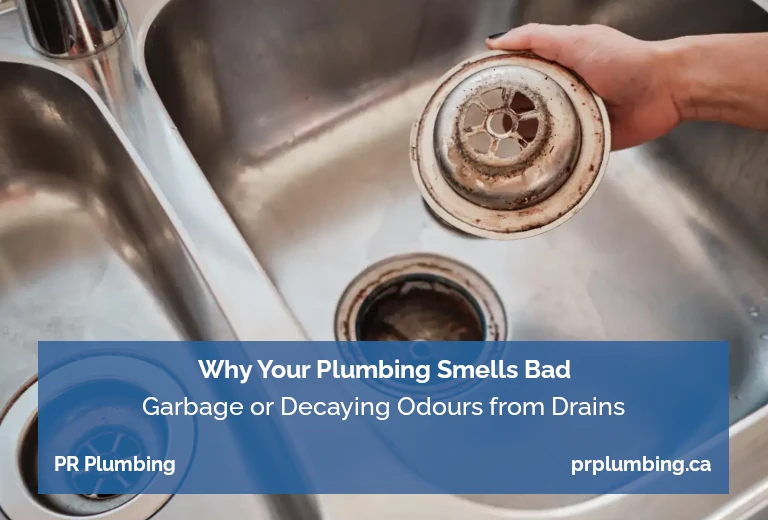
Garbage or Decaying Odours from Drains
If a drain smells like rotting food or waste, buildup inside the pipe is often to blame. Over time, grease, soap residue, food particles, and organic matter cling to the inside of pipes and form a layer known as biofilm.
Running hot water may temporarily reduce the smell, but it rarely removes the buildup completely. In many cases, professional drain cleaning is needed to fully clear the pipe and eliminate the odour at its source.
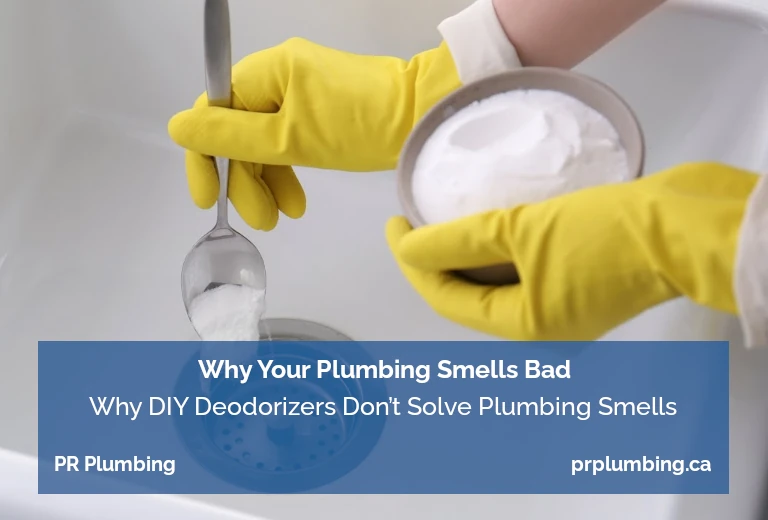
Why DIY Deodorizers Don’t Solve Plumbing Smells
Many homeowners try to deal with plumbing smells using chemical cleaners or drain deodorizers. While these products may reduce odours temporarily, they rarely address the underlying cause.
In some cases, chemical products can actually worsen plumbing issues by:
- Corroding pipes
- Damaging seals and fittings
- Masking serious problems until they become emergencies
When plumbing smells keep returning, it’s usually because the real issue hasn’t been resolved.
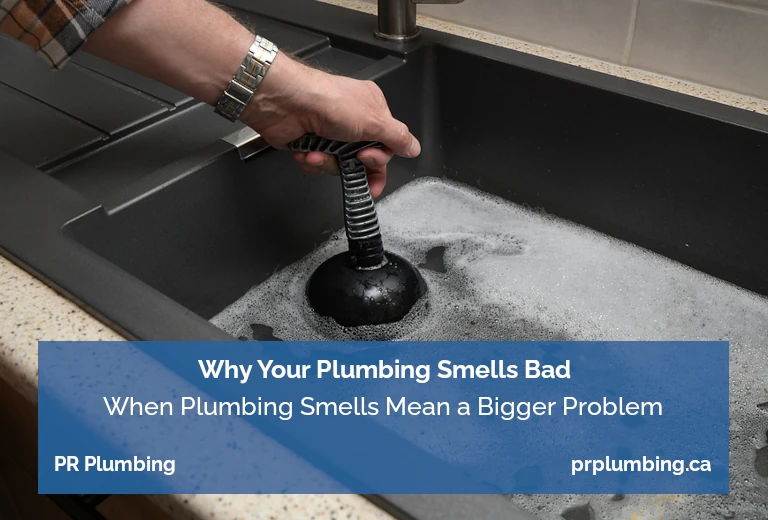
When Plumbing Smells Mean a Bigger Problem
Some plumbing smells are minor, but others can indicate larger system failures.
Persistent odours may be linked to:
- Sewer line issues
- Improper or damaged venting
- Hidden leaks beneath floors or behind walls
Ignoring these warning signs can lead to expensive repairs, water damage, and air quality concerns inside the home. Early diagnosis is often the most cost-effective solution.
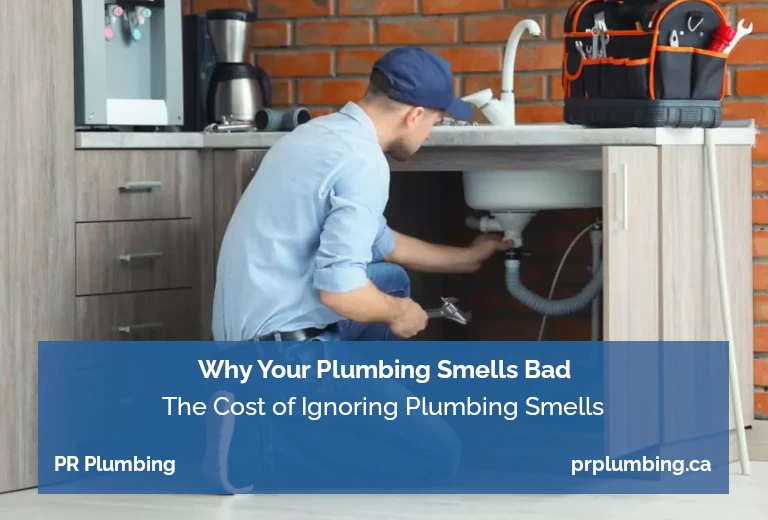
The Cost of Ignoring Plumbing Smells
Strange smells are one of the clearest signs that something isn’t right with you plumbing system. Whether it’s sewer gas, moisture buildup, or debris inside your pipes, plumbing smells should never be ignored or covered up.
A professional inspection can identify the source of the problem and prevent further damage. Addressing plumbing smells early protects your home, your health, and your peace of mind.
If persistent plumbing smells are affecting your home, PR Plumbing can diagnose the issue and provide a long term solution.
Call PR Plumbing on (905) 429-9622 today.